



Your home is your castle; besides that, it’s also an investment. With those two ideas in mind, it’s no surprise that taking care of the home is high on any homeowner’s list of priorities. Maintaining your house does require a keen eye and a bit of vigilance, and that’s especially true of the parts of it that specifically keep the elements at bay (like the roof). For many homeowners, a roof leak looks like a dramatic event: a sudden storm, a crashing sound, and water pouring through the ceiling into a bucket. While those moments certainly happen, the vast majority of roofing issues are far more quiet (and therefore insidious) events.
Water is incredibly patient. It can travel quite a distance from the actual entry point before it finally reveals itself inside your living space. By the time you notice a puddle on the floor, the moisture may have already spent months saturating insulation and weakening wooden supports. Recognising the early, quiet indicators of trouble and contacting a reliable roofing service for help can save you a significant amount of stress and a much larger repair bill later on.
Here are the subtle signs that your roof might be struggling to keep the moisture out.
1. Faint Stains on the Ceiling or Walls
One of the most common early warning signs of water damage is a small, discoloured patch close to where the water comes in (in this case, that would be the ceiling). These often appear as light brown or yellow rings, looking somewhat like a dried coffee spill. These marks are caused by water soaking through the drywall and then drying out as the weather clears.
Because these stains can remain small for a long time, it is easy to dismiss them as a one-time fluke or perhaps a splash from an upstairs bathroom. However, if the stain is on the top floor of your home, then it clearly can’t be the plumbing at fault. Gravity ensures that water always finds the path of least resistance. A stain in the corner of a room might actually be caused by a leak closer to the peak of the roof. If you notice a water ring forming, it’s usually a sign that moisture has already bypassed the shingles and underlayment.
2. Peeling or Bubbling Paint Near Window Frames
Moisture doesn’t always drop straight down. It’s common for any water trails to run along the rafters or the interior of the wall studs instead. When water reaches a horizontal barrier, like a window header or a door frame, it tends to pool. Eventually, this trapped liquid can work its way behind the paint or wallpaper.
If you see paint that looks like it’s blistering or peeling away from the wall in sheets, it isn’t always an issue with the paint quality. Check the drywall behind that paint; if it’s damp to the touch, you might be dealing with a roof leak trickling down to that point. In some cases, the wall may also feel slightly soft or spongy when pressed. These are just more signs that water is migrating from the roofline down through the wall cavity. If you detect these problems, have the roof checked and the leak found to prevent damage around the house (e.g. deterioration of the wooden framing surrounding your windows).
3. A Persistent Musty Odour in the Attic
Many roof problems tend to manifest near the attic, so if you’re looking for more clues to indicate a leak, this is a good place to visit. As a space that most people rarely visit, attics tend to retain the same smells over time. However, if you go up there and notice a heavy, damp, or earthy smell, take it seriously. A healthy attic should smell like wood and insulation, perhaps a bit dusty, but never damp.
A musty scent usually points to the presence of mould or mildew; these fungi thrive in dark, humid environments, and any leaks can strongly contribute to their growth. Even if you can’t see a literal drip, the humidity levels in the attic might be spiked by a slow leak if it saturates the insulation. Wet insulation also loses its ability to regulate temperature, which can lead to higher heating costs in the winter as heat escapes through the damp material. Looking after your roof is just one way to keep your home warmer and more comfortable in winter, as an additional benefit to keeping up with your maintenance.

4. Excessive Granules in the Gutters
Asphalt shingles are coated with small granules that protect the underlying material from sunlight and impact. Over time, these granules naturally wear off. However, if you are cleaning your gutters and find an excessive amount of debris there, your roof is likely reaching the end of its functional life.
When the protective granules disappear, the shingles become brittle and prone to cracking. And once a shingle cracks, water can seep through the cracks and into the house. Finding a large volume of these granules is a sign that your home’s armour is thinning. While an issue with the shingles doesn’t always mean leaks on their own, it is very often a precursor that suggests the surface is no longer shedding water effectively.
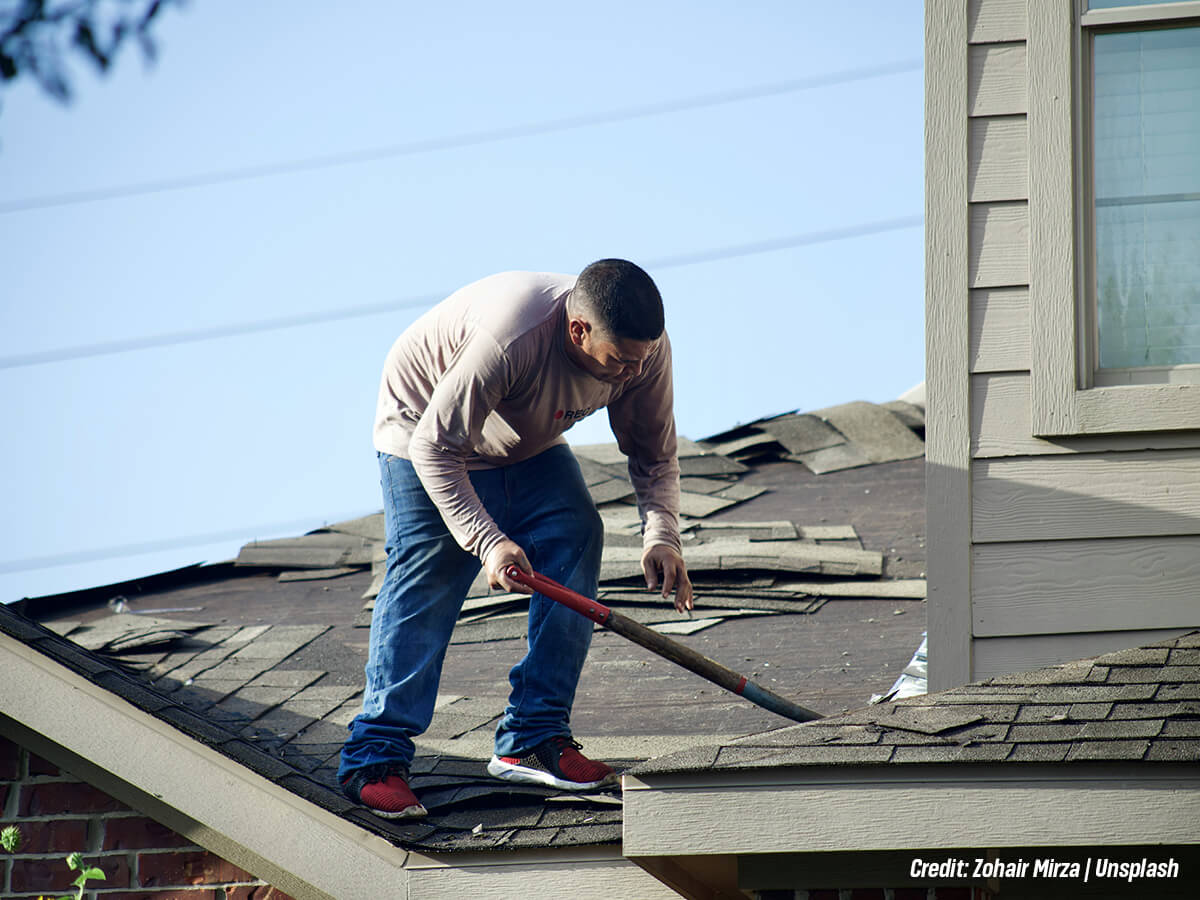
5. Curled or Buckled Shingles
Even from the ground you can perform a quick visual inspection of your roofline. Specifically, you’re looking for shingles that appear to be curling upward at the corners or buckling in the middle.
In a healthy roof, shingles should lie flat and uniform. However, curling very often happens when the underside of the shingle is exposed to moisture, which can then cause it to swell or distort. Once a shingle loses its flat profile, it no longer creates a watertight seal with the piece below it. Wind can also catch these raised edges more easily, and can tear them away during particularly windy days. If the roof looks lumpy or uneven from the driveway, it may be a sign that this barrier to your roof has been compromised.
6. Spots of Algae or Moss Growth
While a bit of moss might look charming on a stone cottage, it’s bad news for an urban house roof. Moss acts like a sponge; it soaks up rainwater and holds it directly against the shingles for extended periods. This constant dampness prevents the roofing material from drying out, which eventually rots the structure underneath.
Similarly, dark streaks that look like soot or dirt are actually a type of hardy algae. These organisms eat away at the limestone filler used in many shingles. If you see green growth or dark streaks, it means the roof is staying wet far longer than it should. This persistent moisture is a gateway for slow, hard-to-spot leaks that rot the roof deck before you ever see a drop inside the house.
7. Rusted or Damaged Flashing
Flashing consists of the metal strips installed around chimneys, vents, and where two roof planes meet in a valley. These are the most vulnerable points on any roof because they are where the continuous surface of the shingles is broken.
Over time, the sealant around this flashing can dry out and crack; sometimes, the metal itself might begin to rust or pull away from the chimney. If the flashing is not perfectly flush against the surface, water will easily slide behind it. Even a tiny gap might be enough to allow hundreds of millilitres of water into your home during a heavy downpour. Check these metal junctions regularly for any signs of corrosion or gaps as part of your routine home inspection checks.
8. Dampness Around the Fireplace
If you have a fireplace, the area where the chimney meets the ceiling is a frequent culprit for leaks. Many homeowners mistake dampness on the hearth or a dripping sound inside the chimney for a problem with the flue or the chimney cap. While those are possibilities, it may also be the case that the roof-to-chimney connection has failed.
If you notice that the bricks inside the house feel damp after a rainstorm, or if there are white, powdery deposits (efflorescence) on the masonry, water is likely bypassing the roof’s edge. Because chimneys are heavy and can settle differently than the rest of the house, the seal between the roof and the brick is under constant physical stress.
Roof leaks don’t always announce themselves with a dramatic leak that spills all over the house. The actual signs are usually more subtle: a slightly darker patch of drywall or a faint damp scent in the air. By being more aware of these less obvious signs and keeping watch for them, you can address the problem of roof leaks while they’re a minor issue. Taking a walk around your property to check your roof and the surrounding areas of the house is a simple habit that protects the longevity of your home. And in case you detect these signs, swift, decisive action is perhaps the best way to keep your living spaces dry and comfortable for years to come.
When it comes to roofing services, you need a service you can trust. Price Rite Roofing & Siding offers thirty years of experience and a military-grade work ethic to give your roofs the quality TLC they deserve. We provide precise work and sharp attention to detail to ensure your satisfaction when we’ve taken care of your work. Contact us at (440) 238-7663 for a free estimate now.